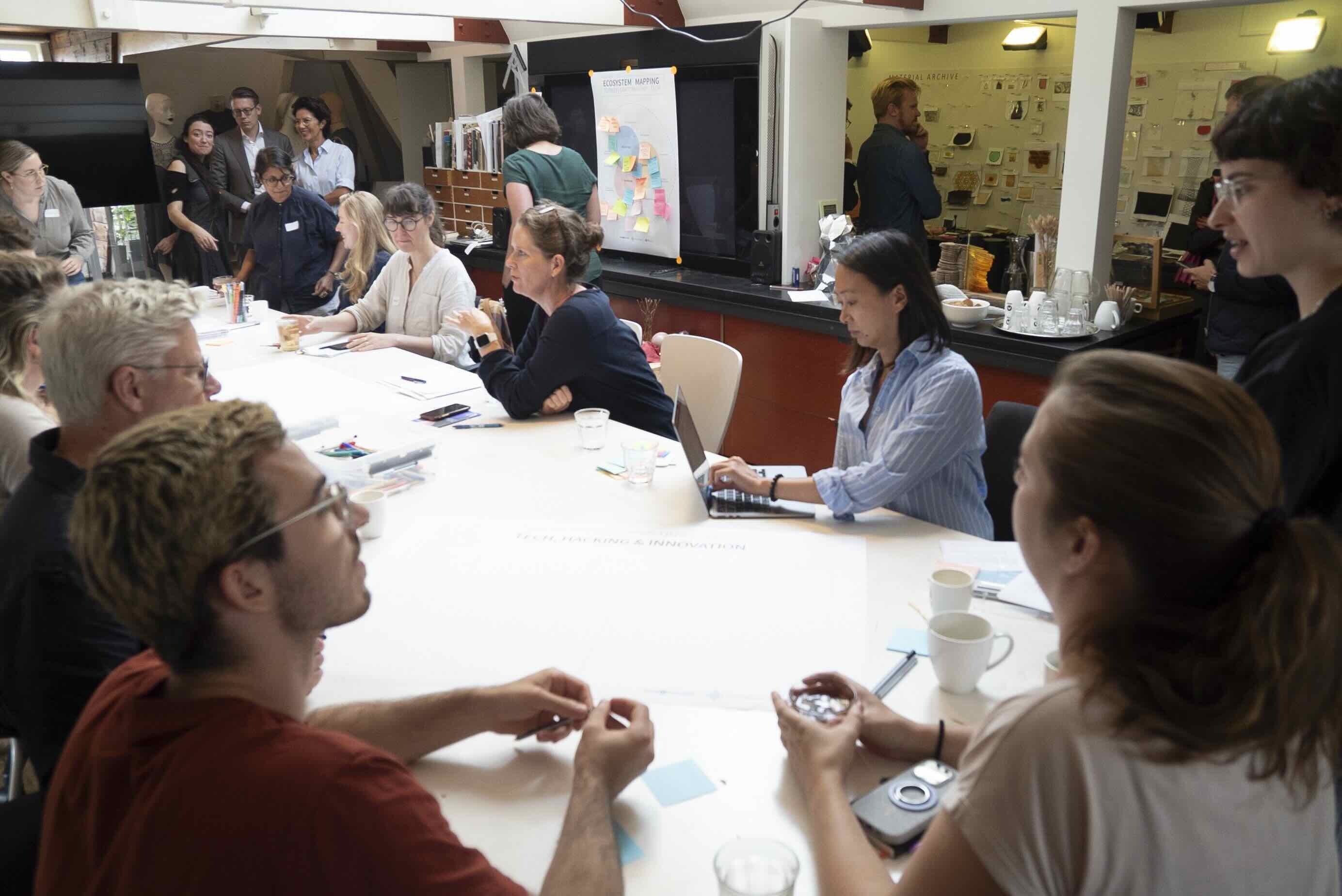
On the 13th of September 2023, the Textilelab of Waag Futurelab filled with people from different sectors to participate in the first workshop of the Tracks4Crafts pilot. Invited were people with different backgrounds, and specialists in fields ranging from traditional crafts, education, heritage, and technology. A diverse group of young graduates all the way to experienced professionals participated. Gathering together to brainstorm the future craftsperson (craftsperson), participants discussed the various needs, wishes, opportunities and challenges the future craftspersons would have to face. After an introduction of the Tracks4Crafts project, the participants of the workshop were invited to tour the Labs at Waag Futurelab to get a sense of the approaches and possibilities of the organisation.
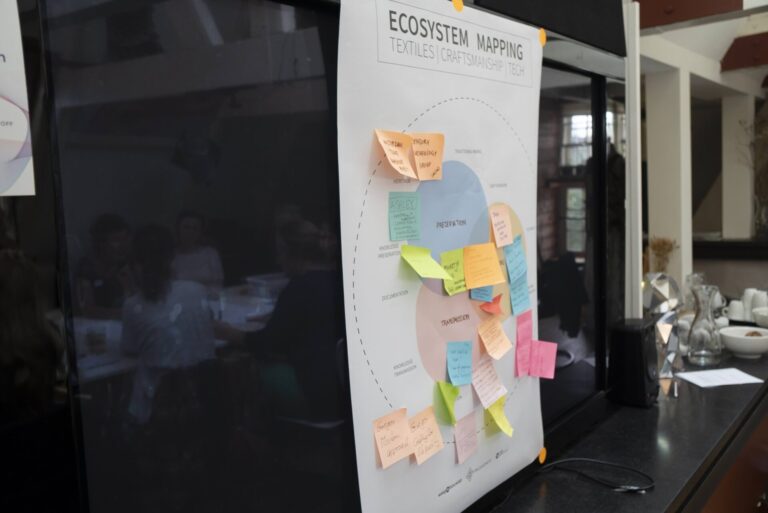
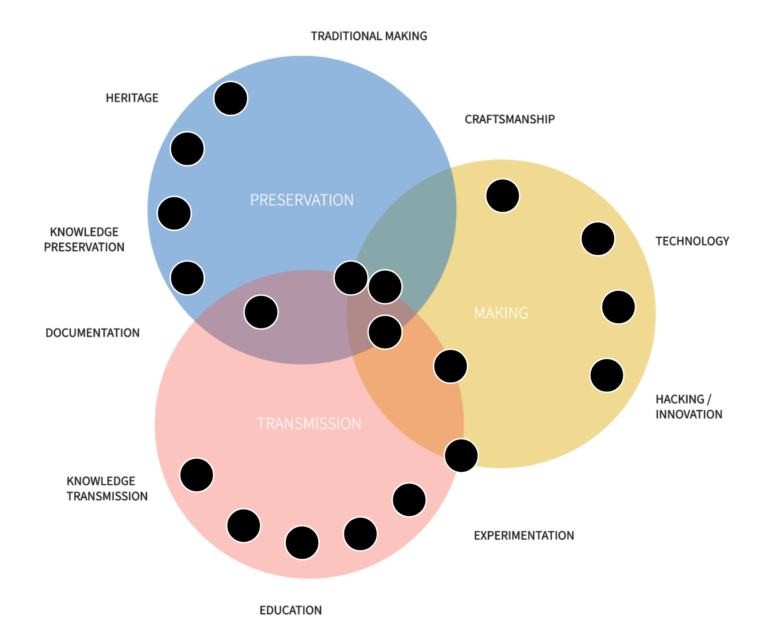
Each participant introduced themselves with the help of an object they brought related to their work, research, or craft. After presenting, they positioned themselves on a cross-sectional ecosystem that bridged the sectors of education, heritage and technology. This created a visual mapping of the ecosystem of textiles, craftsmanship and technology present within the Textile Lab at that time. Then participants were divided up into smaller groups related to tech, hacking & innovation, education & transmission, and heritage & craftsmanship, to discuss the challenges and opportunities surrounding textile craft knowledge.
Out of these discussions, different challenges and questions arose; traditional craftspeople don’t often start working in a FabLab. It is rare for them to gravitate to new technology; rather, hybrid designers or technologists move towards crafts. So how would we invite and support traditional craftspeople to start exploring tech? Challenges in identifying how a boundary between the person and the machine or tool evolves were brought up; how do you maintain experimentation, serendipity and tangible intervention when there are digital/machine processes incorporated in the crafts process? Regarding education, the challenge of combining the wide variety of available resources to guide the public in finding the right information in a more connected way was discussed. Further questions surrounding technology were brought up; how do you up-scale, develop and share in an open manner the transmittance of technological, corporal and embodied knowledge? And how would online learning through Artificial Reality/ Virtual Reality/ Artificial Intelligence be able to overcome the lack of tangible feedback coming from the haptic experience? Finally, how do you ensure commercial viability within a transparent, open-source, and interdisciplinary exchange? When not credited correctly, this leads to a loss of impact and income for makers and craftspeople.
Besides these challenges some needs and opportunities were also established. The need for a shared definition of craftmanship which is more contextualized to the present was uncovered, creating a term which includes both what is traditionally thought of as craftmanship as well as new technological advances becomes important for inclusivity. This opens up an opportunity to reflect on technology and its integration into traditional craft knowledge. Younger generations become more interested in the creation of machines and tools for small-scale production, creating a need for young professionals to contextualise the use of materials/ tools to today’s challenges of making and production, and to experience the effort and use of these tools and materials. Looking to embrace the value which lies inside these technological tools and materials and see a future where a collaboration between the craftsperson and these tools is seen as embodied and positive as opposed to a threat to traditional craftsmanship. This also creates a need to re-appreciate the signature of both hands and machines, creating a renewed value to the aesthetic imperfection that is visualized in a craftsperson’s journey. Finally, a lack of an open-source approach was revealed for traditional crafts knowledge as it is often passed on from individual to individual in almost secretive ways. This creates a need for open knowledge that can be explored and renewed; embracing open-source approaches can also promote innovation, sustainable avenues and an approach to making for the future.
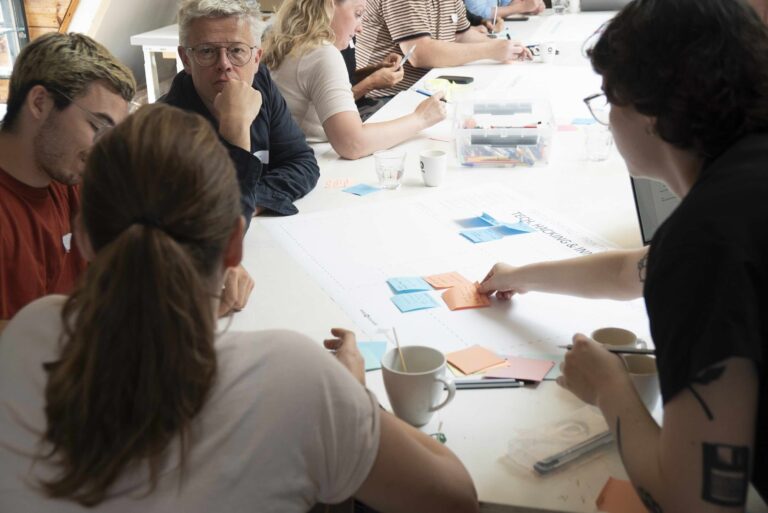
This workshop allowed for new perspectives on the challenges, needs and opportunities that arise when imagining the future craftsperson. During the workshop the hope for a truly collaborative approach that promotes network creation and appreciation of making by a wider public was expressed by the participants. As we move away from viewing craftsmanship as something only from the past, the opportunity arises to create an approach to craftsmanship that links today’s challenges to support sustainability efforts and individuals intrinsic motivations.
Why is this relevant
This workshop created the baseline for the creation of the pilot by Waag Futurelab called ‘Hacking the Machine’.
Collected by
Workshop