
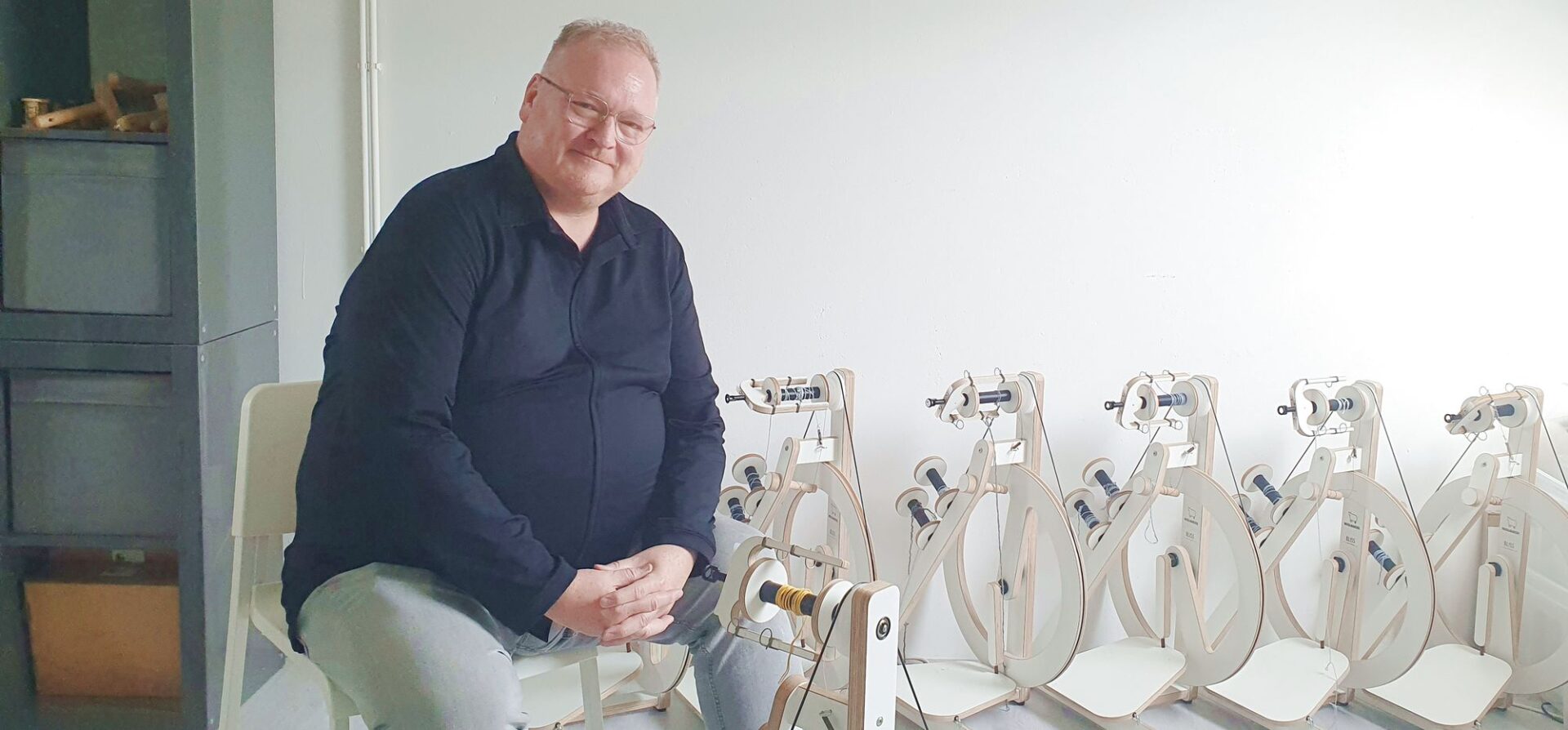
Gregor Falkenhagen is a craftsperson with experience in the textile world as a tailor, and projectmanager within IT businesses in the fashion-industry. Having knitted and crocheted since he was thirteen, Gregor decided to establish a small business teaching crafts after moving from Germany to the Netherlands with his partner 10 years ago. Now, he mostly gives lessons in spinning yarn at ‘the Work Shop’, as well as in his own company ‘Men at Wool’.
After seeing his grandmother and aunt working with traditional crafts, he was inspired to start himself. Knitting created an outlet for his creativity; as Gregor mentions, he has always been a maker and enjoys creating. Within his teaching and through his making he addresses themes of sustainability, gender stereotypes, self-reflection and ‘zen-ness’ through practising traditional crafts.
Connection to the craft
The process of making is an embodied experience. Gregor mentions, through time and practice, your hands automatically start to do what your head is thinking – what it wants to create. Figuring out and understanding the technique behind certain crafts form the base of Gregor’s interest in crafts. It takes skills, knowledge, and patience to achieve a level of craftsmanship where you can rely on your different senses.
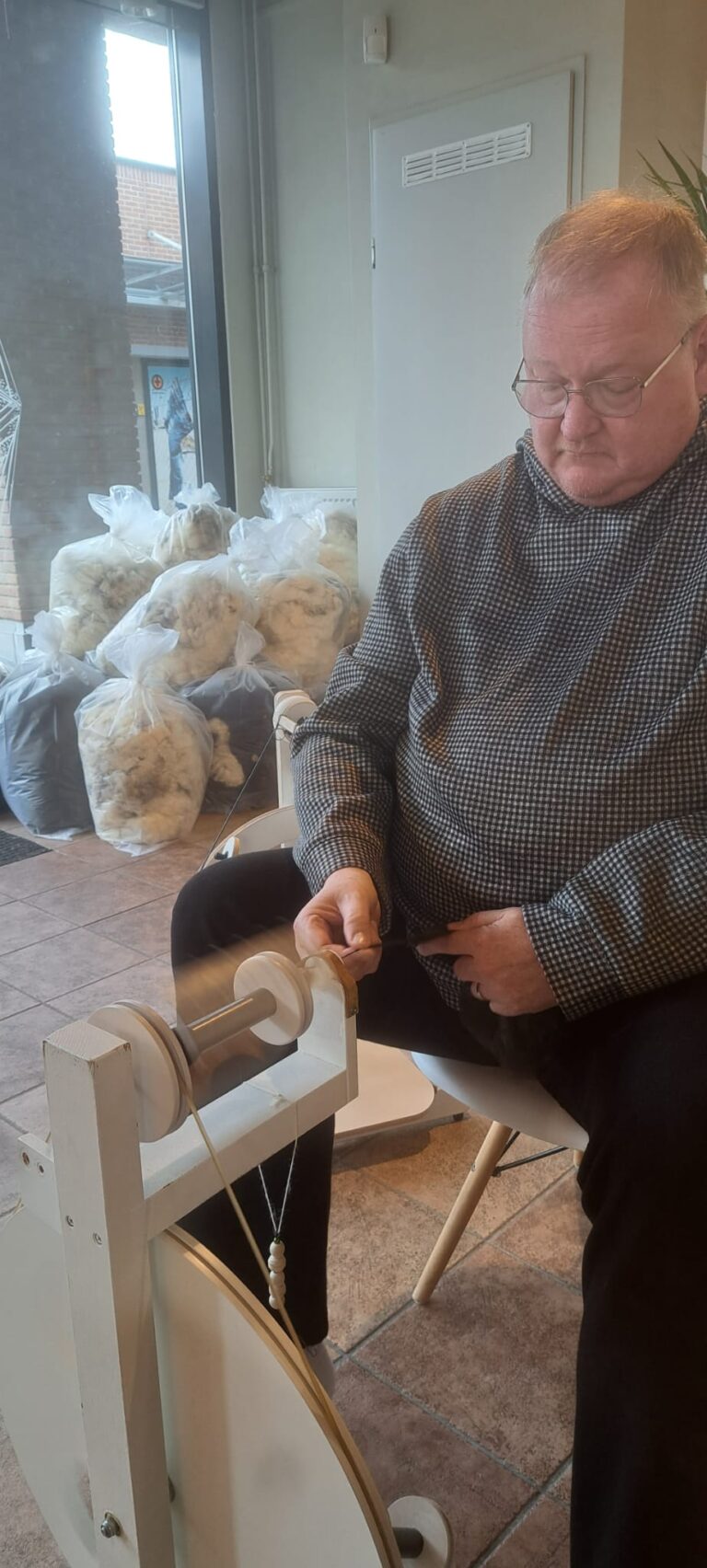
The sensoric experience of crafts is important; Gregor mentions he uses unwashed sheeps’ wool in his lessons to truly understand and experience the cycle of making fabrics. When using this unwashed wool, the smell of sheep creates an interlinked experience, bringing the craftsperson who is spinning closer to the material they are using and creating an understanding of where it came from. While the smell doesn’t necessarily give crucial input for the practice of spinning, it is part of the sensorial experience.
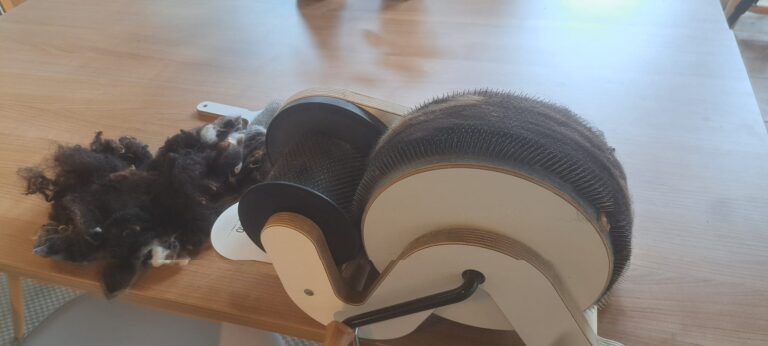
Sound also plays a role in the crafting process, Gregor mentions, as you are able to hear when something goes wrong with the carding mill while you are carding wool.
While visually we register with our eyes what is happening, a lot of the knowledge input also comes from the sense of touch, the haptics. By feeling the materials’ fibres through your hands, their softness or roughness, you are able to feel their shrinkage or elasticity. This information is important in the process of spinning fibres.
View on the machine and the traditional craft
The usage of new technology isn’t new to traditional crafts. We have spun wool for a long time: before the wheel was invented wool was spun by using sticks with weights on them, also called drop spindles. After the invention of the wheel there have been different versions of spinning wheels, these wheels are the most common and known to spin wool on. Nowadays, you are able to spin wool without a wheel on an e-spinner driven by electricity. The technique of spinning – twisting lengthy fibres together – stays the same; however, the craftsperson might have a preference for the usage of different tools.
The way people relate to different tools used to spin wool is very personal. Some people would rather spin wool with a drop spindle because it is relaxing; you are really able to really enjoy the basic technique, while others might prefer spinning wheels with a treadle; because they see it as a traditional part of spinning. Gregor himself believes that you have to see these different machines as an aid to help you in your craft; the moment a machine can work without the human it shouldn’t be considered a craft anymore. Which tools you use to practice your craft depend on your needs. If you seek something relaxing, something to ease your frustrations and put your emotions into, you would probably opt for tools that are less technically advanced. If you need to make something quickly, you would perhaps opt for a more technically advanced tool. For example, knitting goes very quickly with a knitting machine; however, Gregor doesn’t advise on using the knitting machine if you want to relax and get rid of frustrations.
Reach out
If you are inspired by Gregor and his story please reach out to him through:
Why is this relevant?
It is important to understand the viewpoints of craftspeople on their craft and the connection to technology in order to understand the needs and wishes of craftspeople within the project ‘Hacking the Machine’. The interview also showcases that traditional crafts and technology aren’t as far removed from each other as one might think, as innovation within the craft process and technology go hand in hand.
Contributed by
Interview