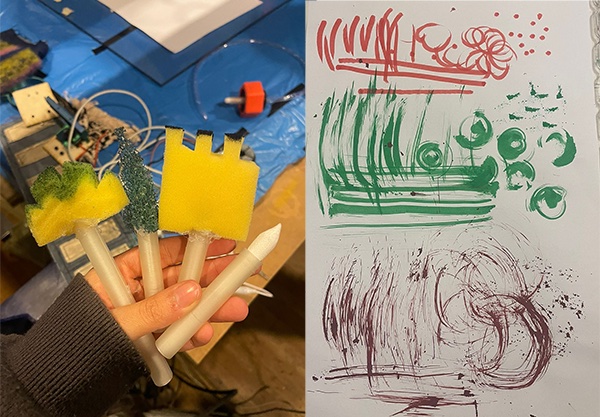
With a printing craft comes the obvious need for tools to print with. In the Netherlands there is a rich history of craftspeople making their own tools, adapted to their personal preferences or the preferences of the people for whom they were making printed textiles. Inspired by the tool making of the Staphorster Stipwerk community and historical block printing, we have developed tools adapted to our needs. We also held a community event inviting local makers to make their own tools to use with our hacked machines, and encouraged Fabricademy students in 2023 and 2024 to do the same.
Tools used in textile printing in the Netherlands
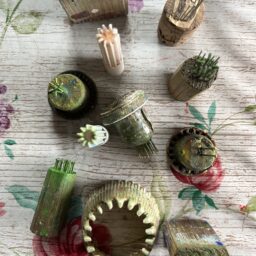
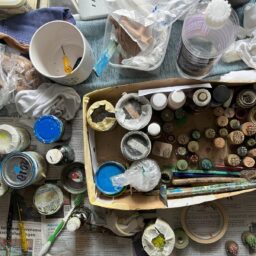
Staphorster dotwork tools
Tools are essential in personal expression and recognizability in crafts like Staphorster dotwork:
Within Staphorster dotwork, every craftperson has their own signature. ‘Drukkers’ use and create their own stamps, have their own preference in pattern usage, and their own embodiment of the craft – some put importance on precision while others might focus more on the balance of colour.
The first tools used in Staphorster dotwork came from block printing. Here, the dotwork designs were made as a whole.
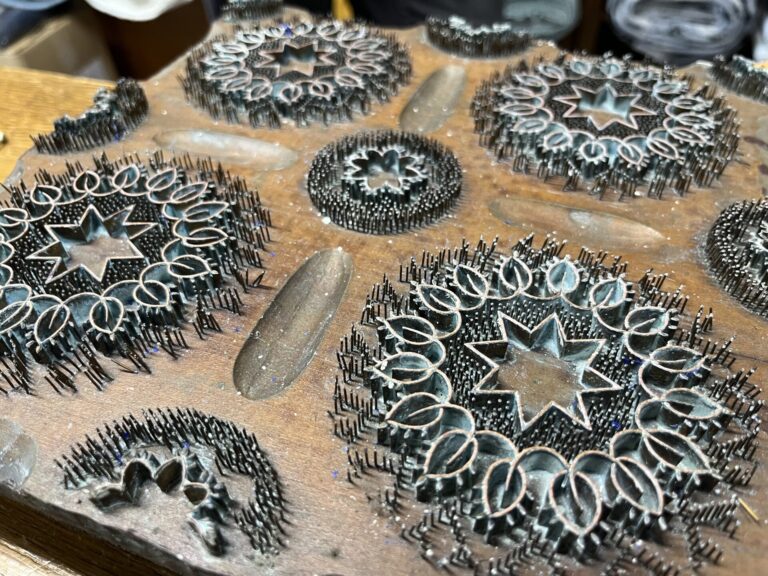
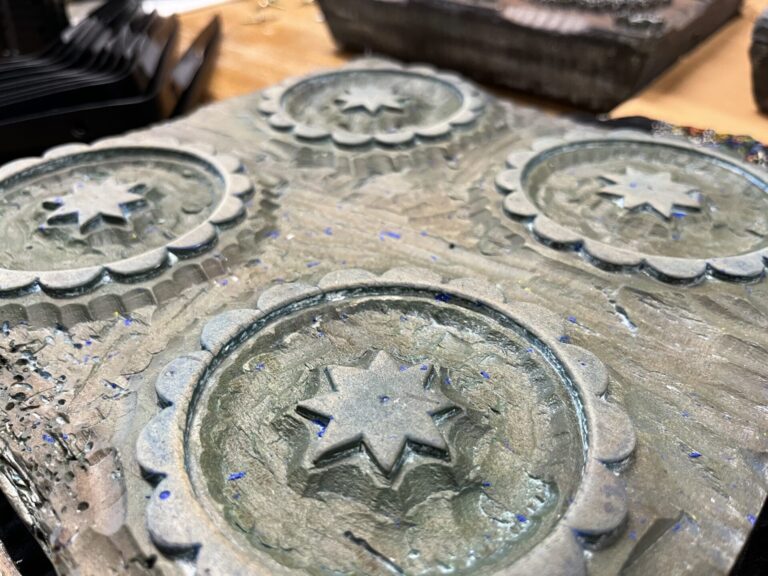
The stamps that are made later are smaller and allow for more modular designs.
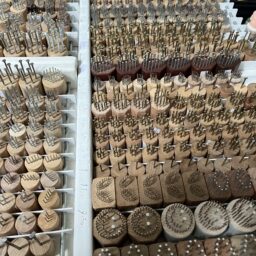
Stamps at the katoendrukkerij
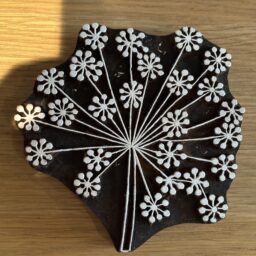
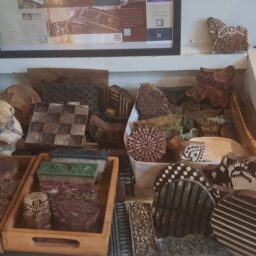
Block printing on cotton has been done in the Netherlands since the 17th century after the printing process had been brought to Europe from India by the East Indies Company. This legacy is safeguarded, displayed and shared by the Katoendrukkerij in Amersfoort, the city where the first cotton printing workshop was opened in 1678.1 Here, Nathalie Cassée has a large collection of historical and contemporary blocks and other tools for printing on textiles from the Netherlands and abroad. Contemporary blocks are carved by hand by artisans in India. She also has a small CNC mill to experiment with in-house block making.
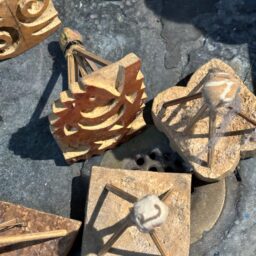
Waag Open: making tools with the local community
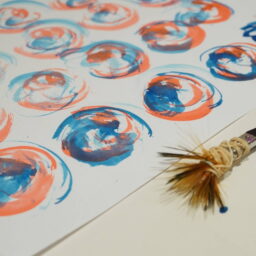
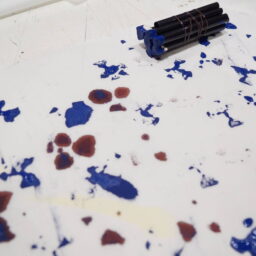
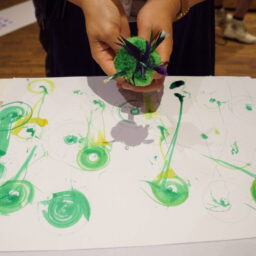
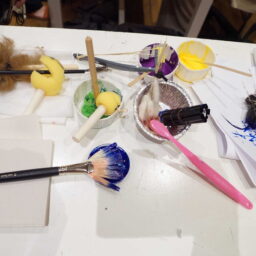
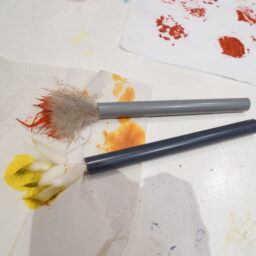
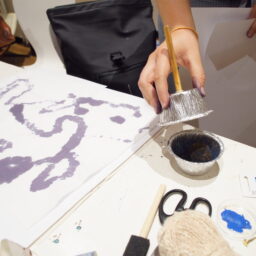
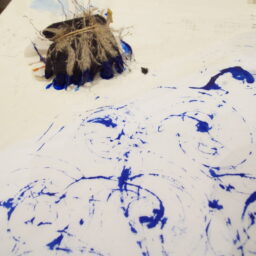
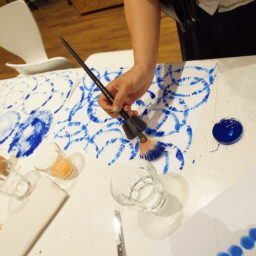
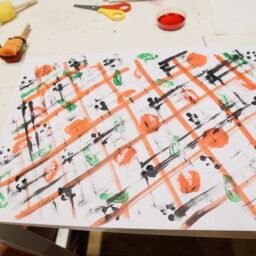
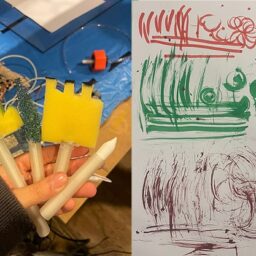
On September 5, 2024, we organized, facilitated and hosted a hackathon evening called ‘Waag Open: Hacking the Tool!‘ involving the local community around Waag Futurelab and the Textilelab. More information in this event can be found here. Here are some of the experimental tools made during the event:
Fabricademy
In november 2023, the Fabricademy students at Textilelab Amsterdam kickstarted the hacking of the large format milling machine in the fablab. Part of their research was brush development. Ray Formilli and Jiawen Gong were tasked with this.
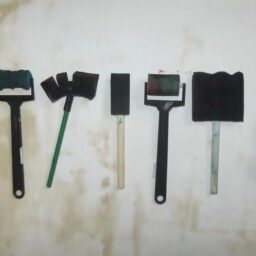
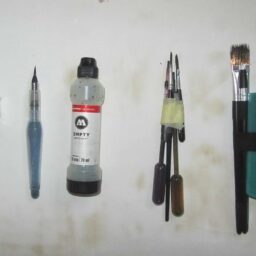
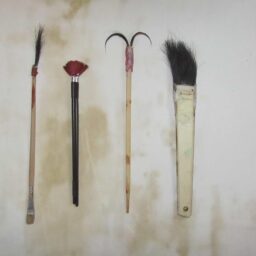
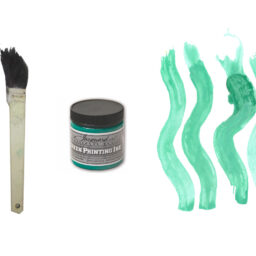
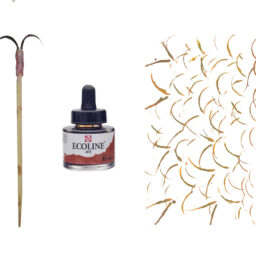
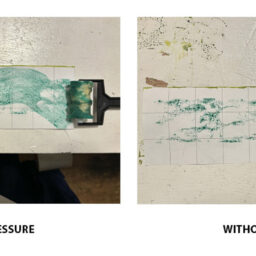
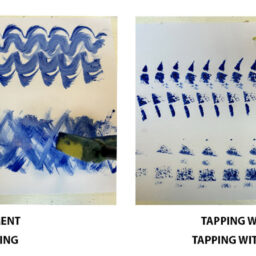
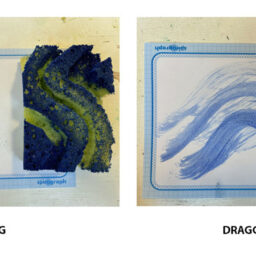
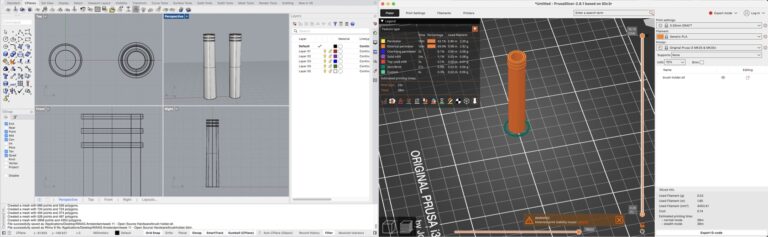
In 2024, Fabricademy students Carolina Beirão and Isobel Leonard continued the large format machine hacking, this time focusing more on developing interactive tools to control brush strokes and a water pump to deposit ink on the canvas. They also developed brushes for their hack, with a hollow 3D printed insert to feed ink into.
Sources
-
De Katoendrukkerij Historische Context accessed January 9,2025, https://www.dekatoendrukkerij.nl/historische-context ↩