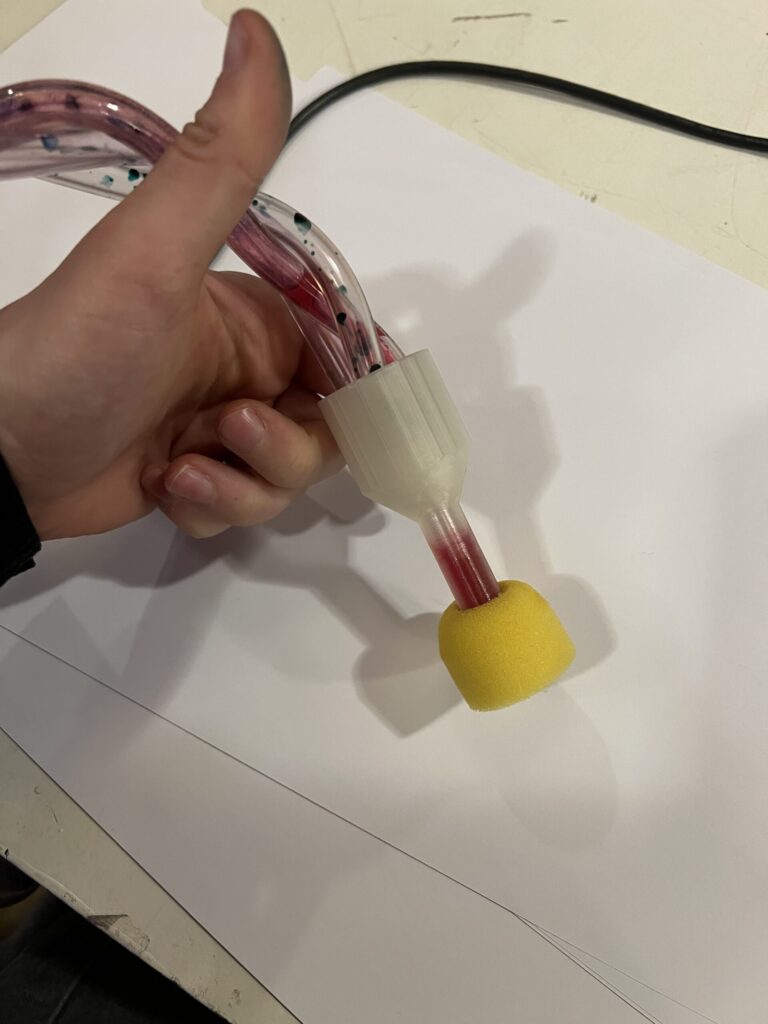
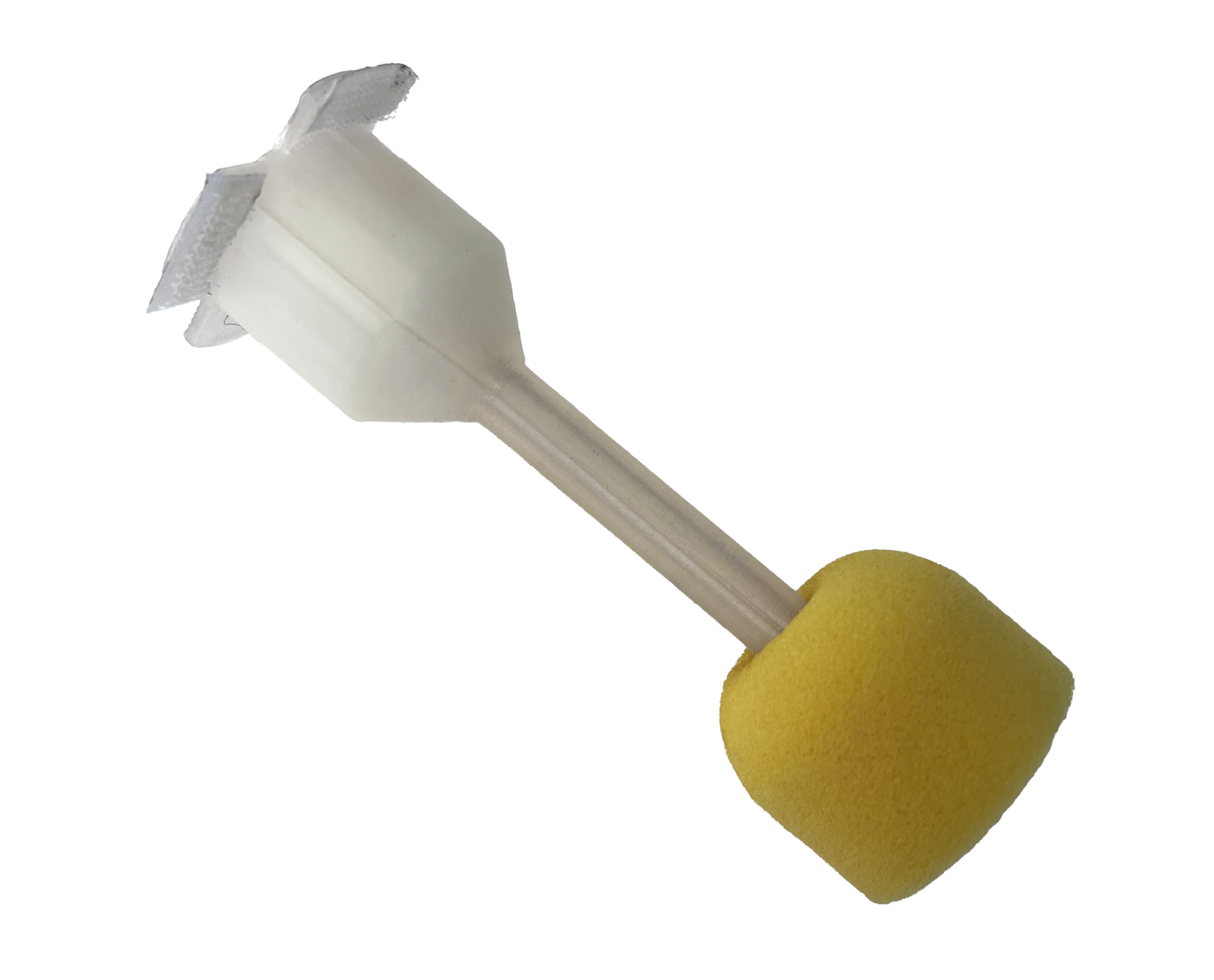
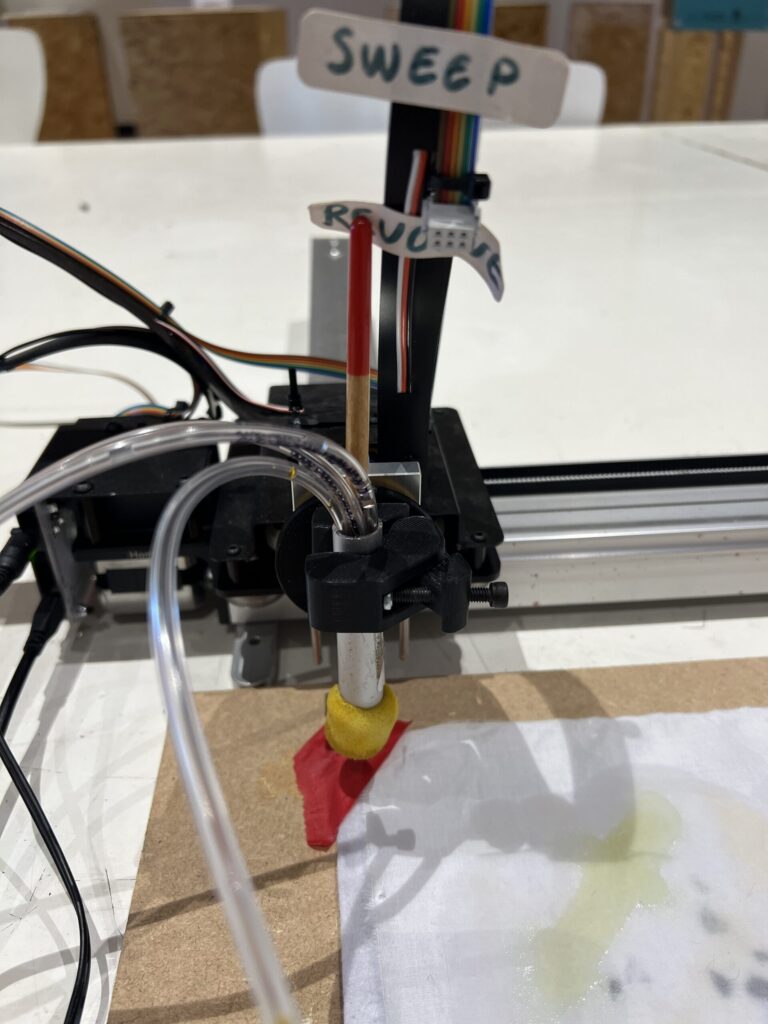
In conjunction with the development of the IV drip tool holder, the need for hollow brushes arose. There is multiple ways to go about this. You can use hollow pipes and stick the ink tubes in there directly, and securing them with something like a stopper (a broken brush in this case). This is the first way we tested and it works, but it’s not really elegant. Tubes can easily slip out and the tube has a fixed diameter throughout which is not very versatile.
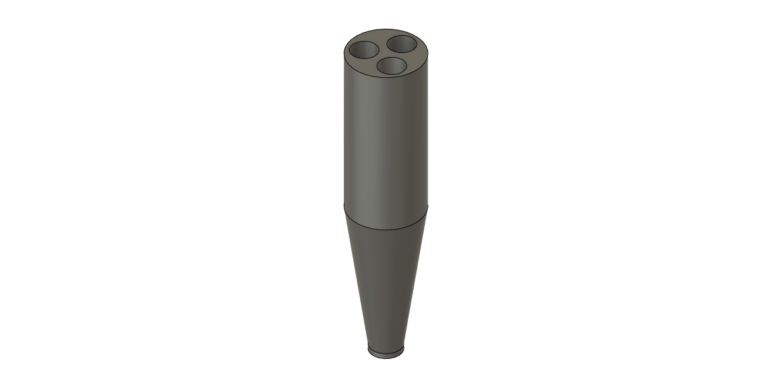
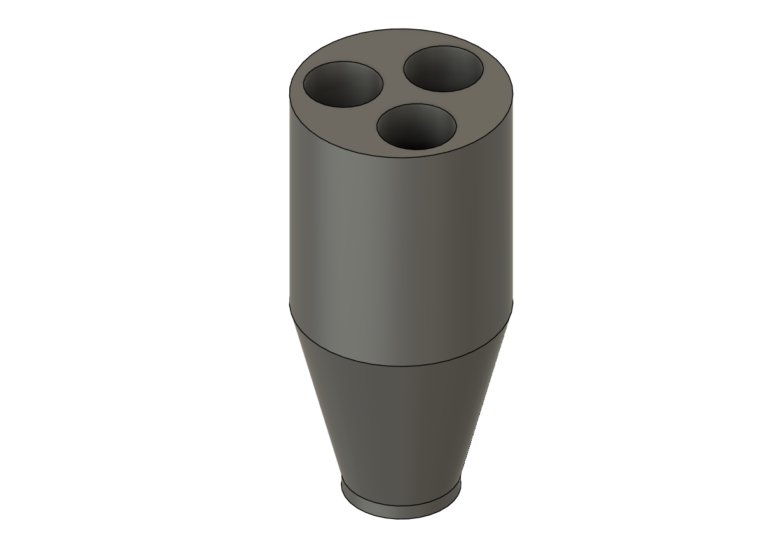
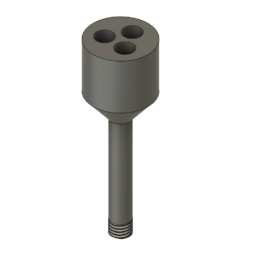
To tackle this, we designed a parametric tool with friction-fit inserts for three tubes and a variable height to allow for various sizes of sponges, brushes and other ends.
Tool for three tubes
In this design, there is space to insert 3 tubes with a diameter of 4mm. The inner hollow areas combine into one tube where the ink can come out. The idea is that you can stick in a brush tip or glue a sponge to the bottom.
Here you can see it with a rectangular sponge brush attached.
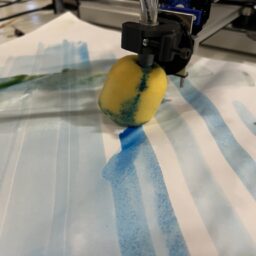
Trying it out with the water pump system in development with blue and yellow ink:
To try it out with a brush tip from a refillable watercolor brush pen, we made it shorter and the diameter at the bottom wider.
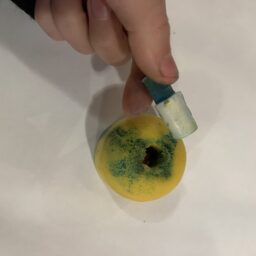
You can then insert the brush tip from a squeeze water color brush.
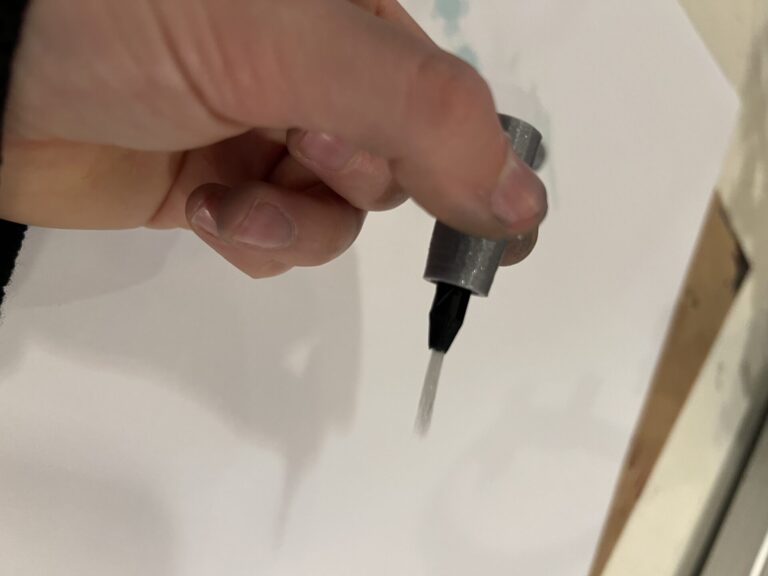
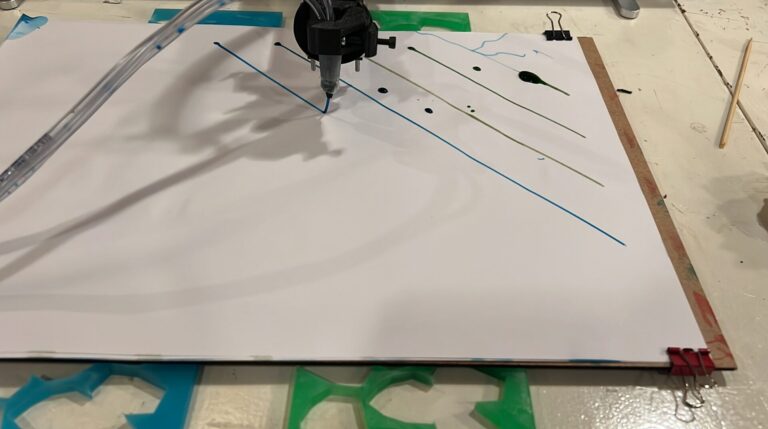
Testing it out with blue and green ink:
We tested a version with a wider bottom diameter with a large sponge:
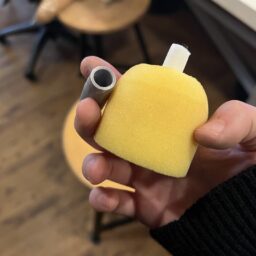
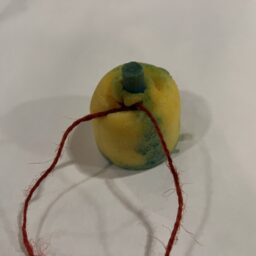
During the development of the water pump system, we also tested wider diameters of the tubes to allow for more ink flow when using thicker inks. Thinner tubes with thicker ink gave too much resistance – especially with ink that had some chunks because of bad mixing. We first tested this by inserting a large tube directly into a sponge.
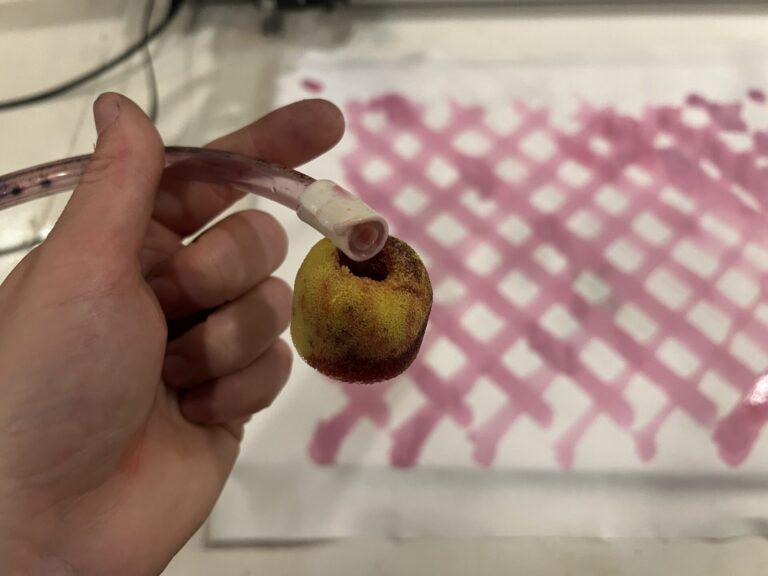
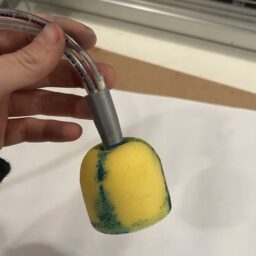
This worked better than the thin tubesThis then meant the tool had to be changed too to allow for this. To still use the Kant twist holder, the bottom part had to be longer and the top part needed to be wider. Here are the tools that came out of these needs:
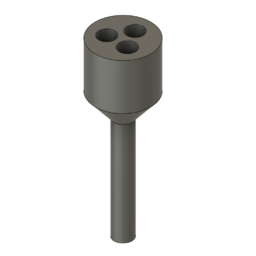
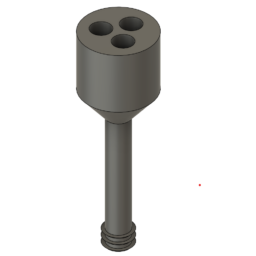
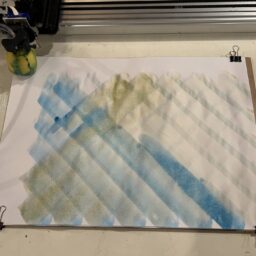
The friction end works well to attach round sponges. As you can see, the ink distributed reasonably well through the end of the sponge, although you can see in the resulting plot that the colors are still a bit side-by-side.
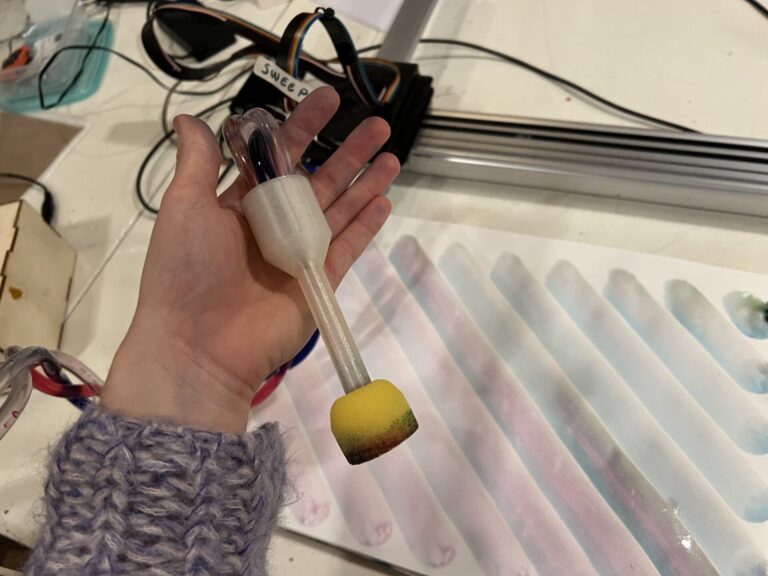
A useful property of the longer transparent neck of the tool, is that when you pump ink through, you can see how much there is in the reservoir. When you stop pumping, the ink pulls back, but the ink still in the reservoir stays. We noticed with previous iterations that if the neck is too short, the ink in the reservoir will be pulled back too, resulting in mixed colors when using multiple colors in a plot.