
Chintz1 was very popular and its orders and imports increased rapidly mid-17th century2; it could take up to three years for the chintz to arrive in the Netherlands. In order to capitalize on this market, Jacob ter Gou and Hendrick Popta, two Dutch traders under the VOC, established the first blockprint workshop in Europe in 1678 in Amersfoort (See volmolen story). Soon many other block printing workshops were established in the Netherlands and Europe; in Amsterdam around 80 were established3.

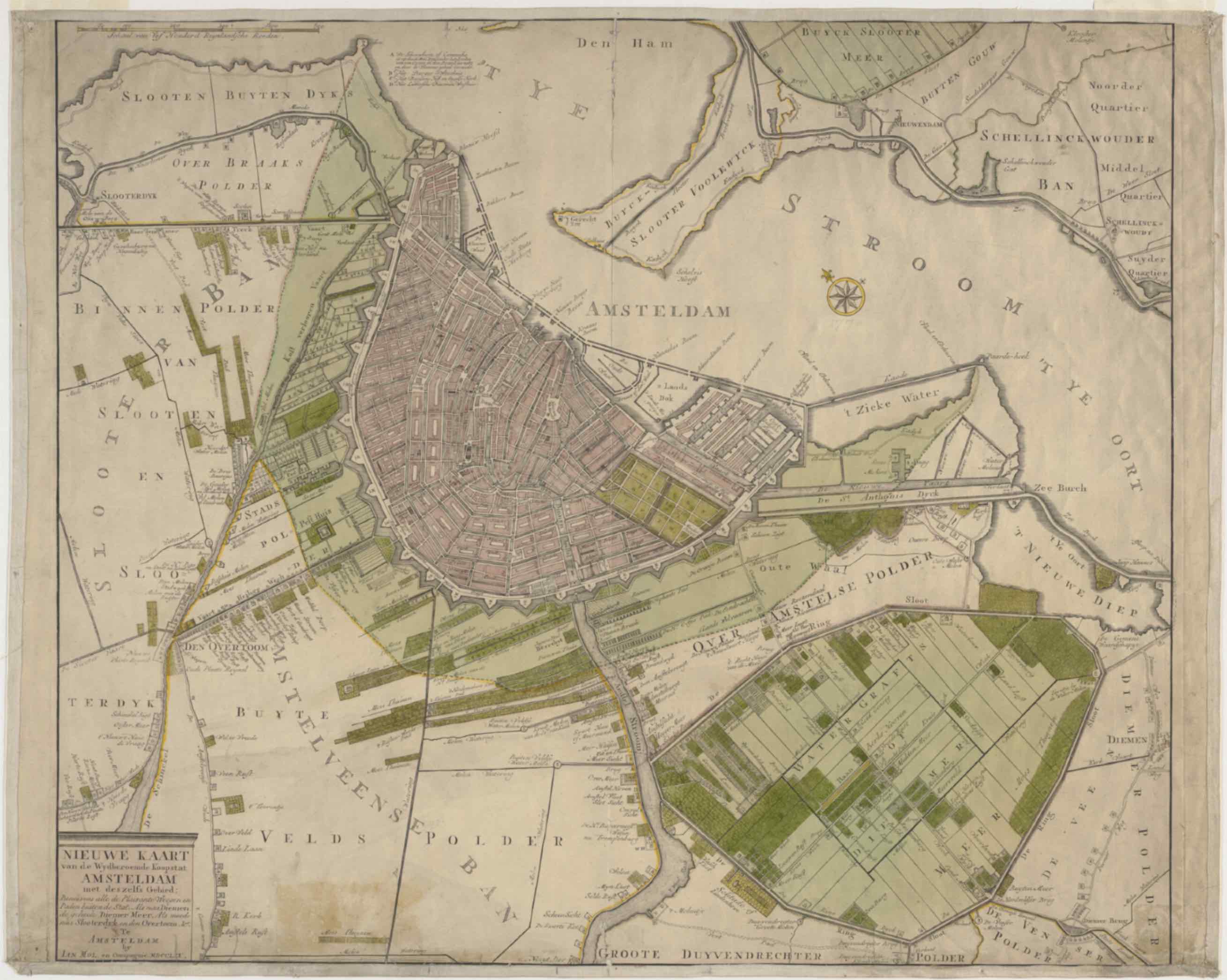
Map of cotton block-printers in Amsterdam
Through uncovering documents in the archives of Amsterdam traces can still be found of these cotton printeries. This map indicates approximately where 24 cotton printers were located during the 18th century.
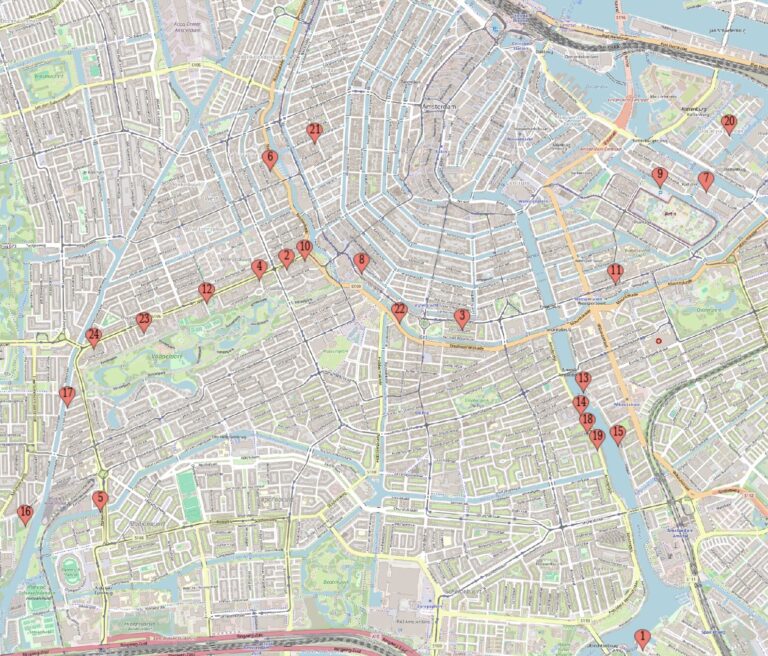
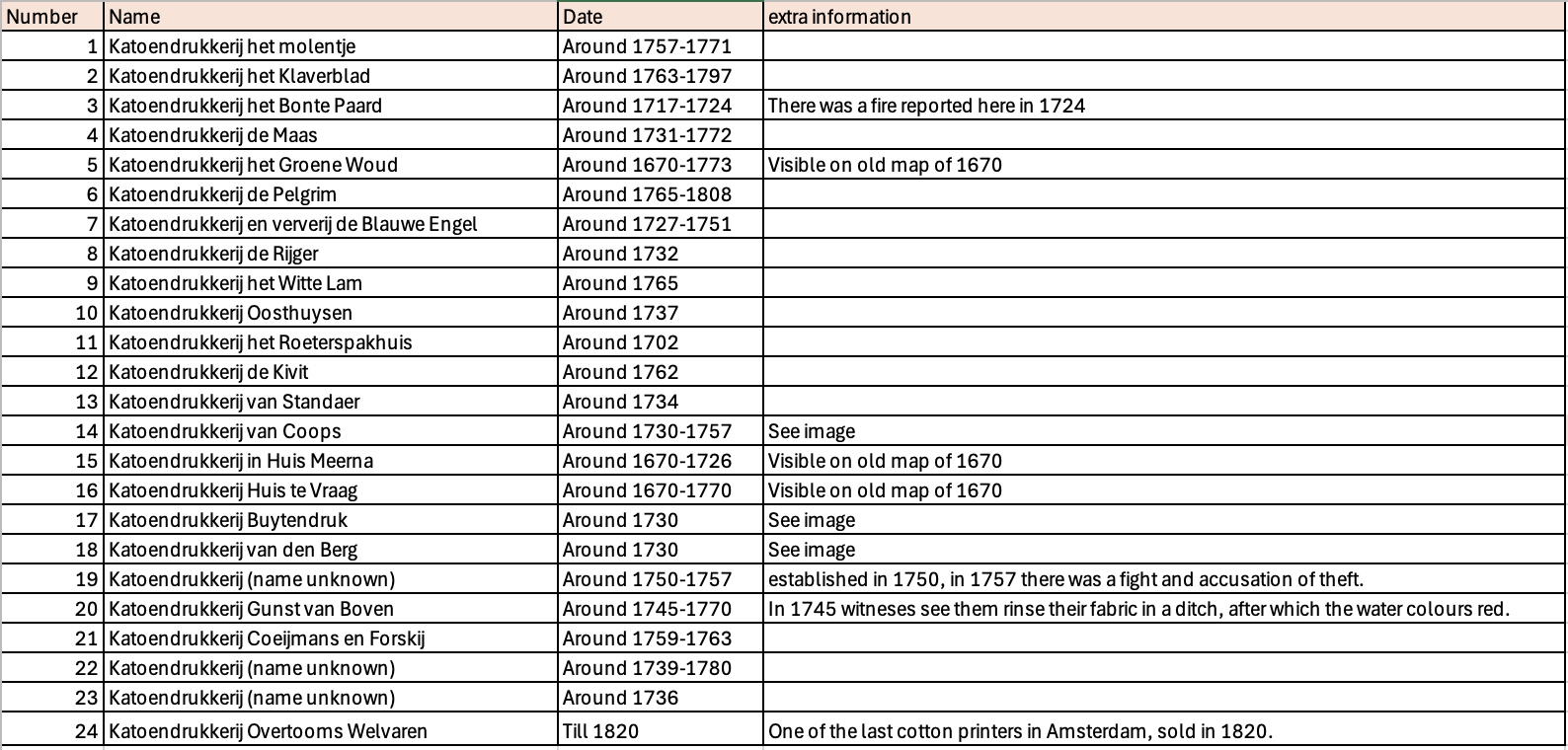
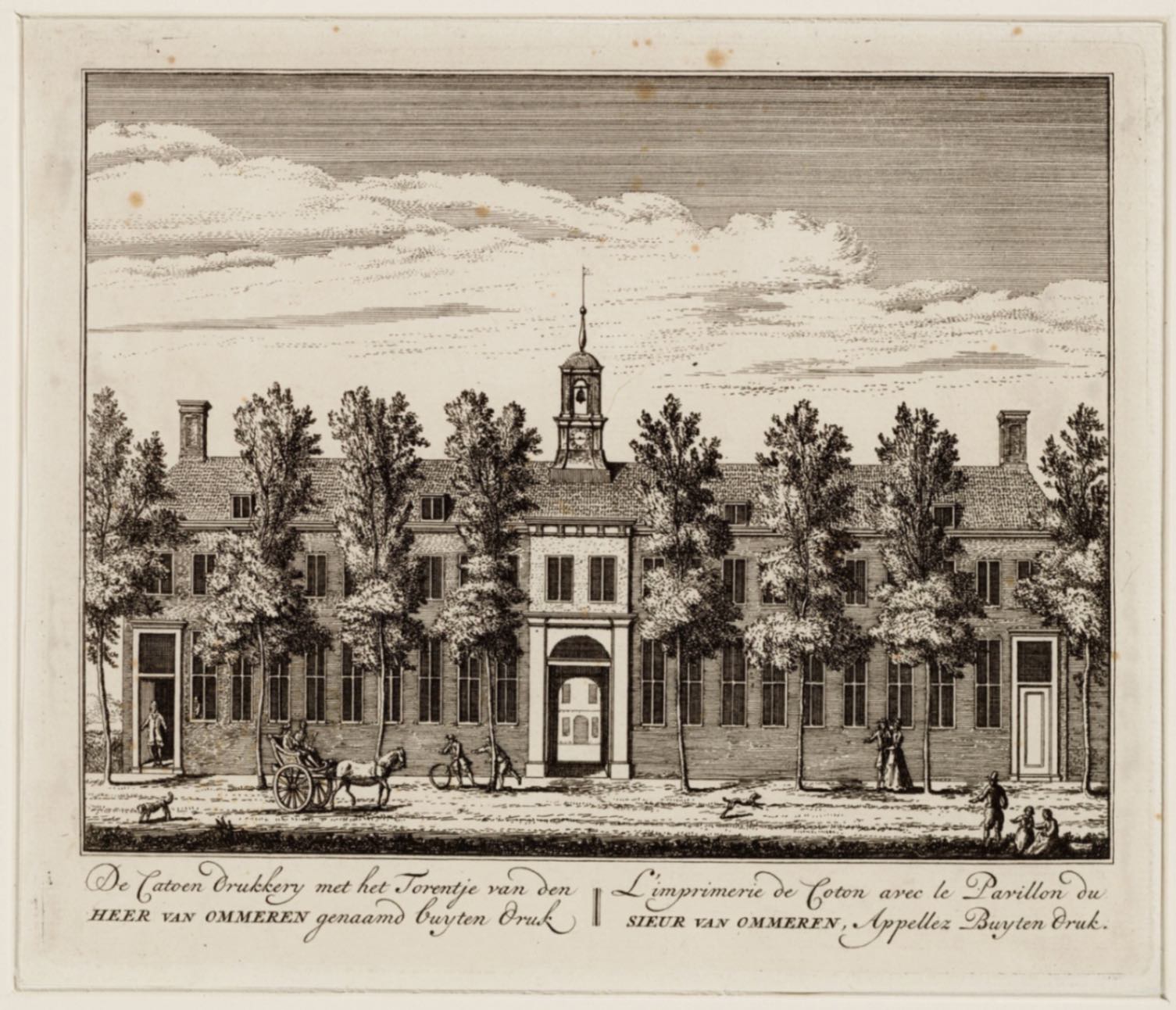
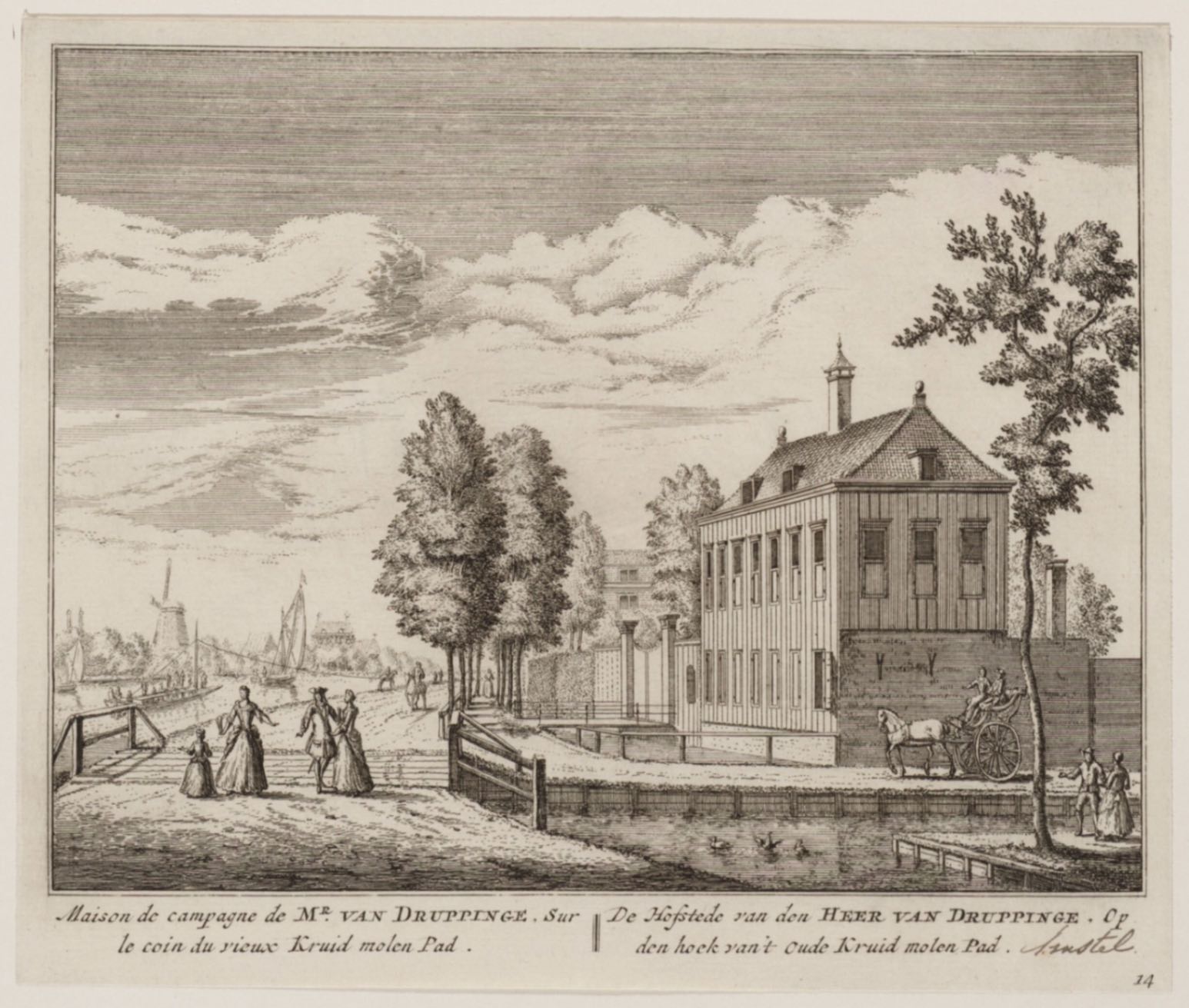
These cotton printers were located alongside waterways as the printing of cotton used a lot of water to wash the fabrics4. The ‘Overtoom’ is one of the places many printers were located 5 (see numbers 2, 4, 10, 12, 21, and 24). In a map created in 1670 of Amsterdam, it is visible to see how this was a waterway before it was covered up in 19036. While the cotton printers of Amsterdam were running very lucrative businesses for many decades, they started to run out of business at the end of the 18th century. After the invention of the steam-driven spinning machine, it became possible to spin cotton in Europe; before this invention cotton was only spun together with wool, while in India they were able to spin cotton on its own7. The Netherlands kept importing cotton fabric from India, while France and England started printing European-made cotton8. The continual usage of Indian cotton fabric finally led to the downfall of Dutch cotton printers as the fabric used was of lower quality than the European-produced fabric, as well as more expensive9. The competition with other countries became too much for the Dutch cotton printers. In 1820 one of the last cotton printeries, ‘Overtooms Welvaren’ (see number 24) in Amsterdam, was sold10.
The Process of Cotton Printing in Europe
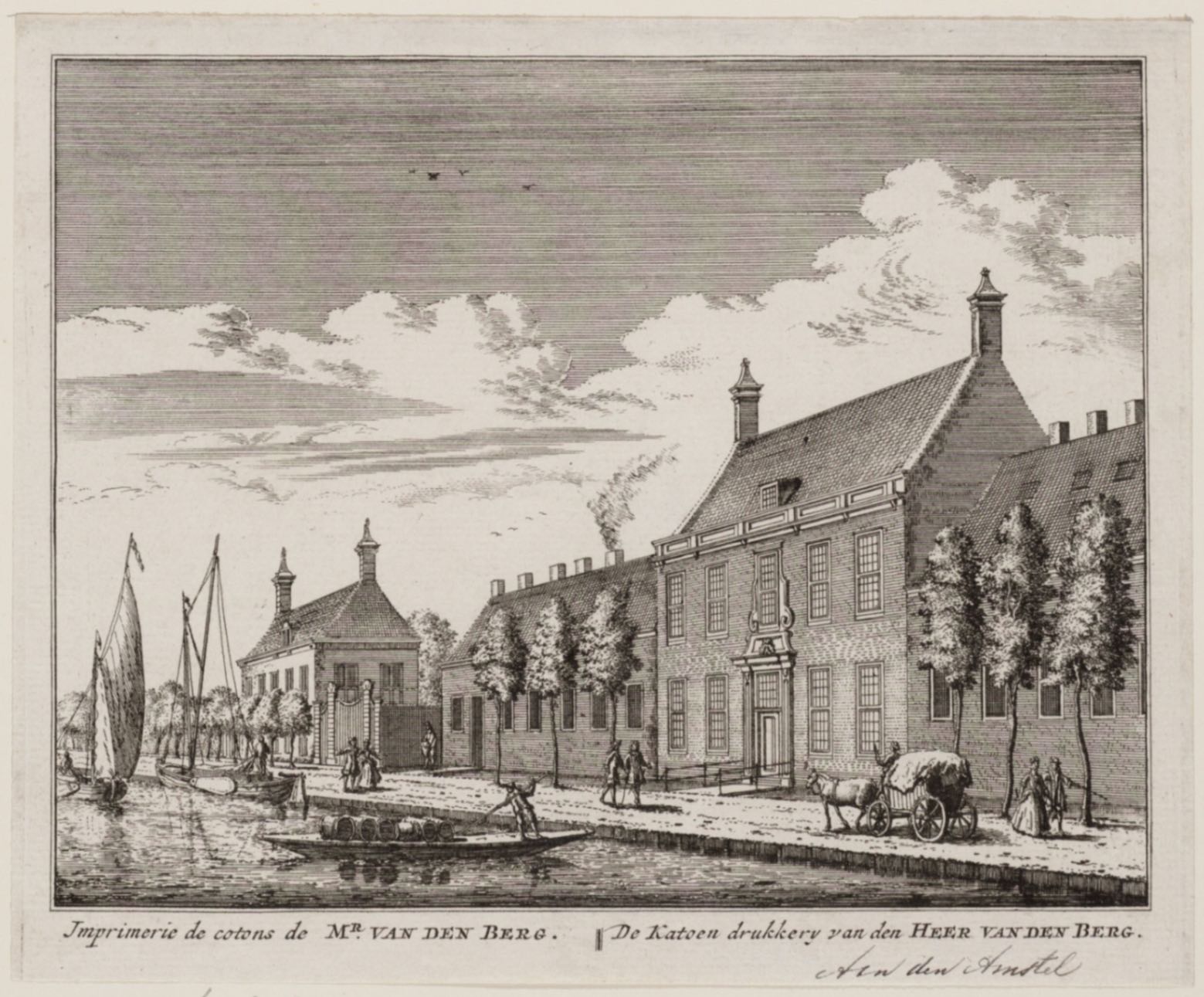
The process of making chintz in Europe slightly differed from the process in India. Hand-painting was most common in India; for cotton printers in Europe, this process was too time-consuming. Therefore, all fabric in the block print workshops was printed with wooden blocks, and after 1750 copper plates and rollers were also used11. These had already been used to print wool and linen with pigments but were adapted to be used for printing in Indian style, meaning they were used to print with mordants or indigo12. The printing method in Europe differed from the one in India; one main difference was that for painting with indigo, they didn’t use the dye bath method13 14. Instead, they directly applied the indigo colour through wooden blocks onto the cotton fabric. Printing on fabric with wooden blocks or copper plates also required thickening the mordants (metallic salts); they used starch, or gum from Senegal or Arabia15.
Why is this relevant?
This story reveals the rich history of cotton block printing in Amsterdam. It illustrates how traditional crafts knowledge from India was utilized and adapted in ways that suited the making process in Europe. This shows that traditional crafts and their practices are fluid rather than static and change depending on their environment.
Contributed by
Archival research, Research
References
-
Chintz; a colorfully patterned cotton fabric. (see story Chintz in the Netherlands) ↩
-
Winnifred de Vos, Pronck & Prael Sits in Holland, Hoe Indiase Sits Het Nederlandse Leven Veranderde (Zwolle: Waanders Uitgevers, 2019), 90. ↩
-
Gieneke Arnolli and Sytske Wille-Engelsma, Sits Exotisch Textiel in Friesland (Zwolle: Uitgeverij Waanders Drukkers, 1990), 6. ↩
-
Marike van Roon, “Overtooms Welvaren,” Allard Pierson, 2018, https://allardpierson.nl/blog/overtooms-welvaren/. ↩
-
van Roon. ↩
-
Gemeente Amsterdam, “De onherkenbare stad,” Gemeente Amsterdam, December 1, 2021, https://www.amsterdam.nl/nieuws/achtergrond/onherkenbare-stad/↩
-
Arnolli and Wille-Engelsma, Sits Exotisch Textiel in Friesland, 72. ↩
-
Arnolli and Wille-Engelsma, 72. ↩
-
Arnolli and Wille-Engelsma, 72. ↩
-
van Roon, “Overtooms Welvaren.” ↩
-
Arnolli and Wille-Engelsma, Sits Exotisch Textiel in Friesland, 72. ↩
-
Arnolli and Wille-Engelsma, 72. ↩
-
Dye bath method; The fabric was tightly packed and submerged into a dye-bath. (see story chintz in the Netherlands) ↩
-
rnolli and Wille-Engelsma, Sits Exotisch Textiel in Friesland, 72. ↩
-
Arnolli and Wille-Engelsma, 72. ↩